What to Wear for an Adventure Elopement (That You Can Hike In)
PUBLISHED JULY 22, 2026 · UPDATED AUGUST 20, 2026
The short answer
For an adventure elopement, wear attire built for movement: an A-line or flowy dress in chiffon, crepe or georgette with a comfortable bodice, broken-in hiking or leather boots, and warm layers you can shed for portraits. Suits should be a stretch-wool or wool-blend in a mid tone. Test everything on a real walk before the trip.
The one rule: dress for the day you actually planned
Adventure elopement attire fails in predictable ways: a corset you cannot breathe in at altitude, a mermaid skirt you cannot step over rocks in, satin that creases into tin foil the moment you sit on a boulder. Every one of those is avoidable at the shopping stage.
So start from the itinerary, not the mirror. Three miles of trail with 800 feet of gain asks different questions than a five-minute walk from a parking area in the Dolomites. We send every couple a location-specific attire brief, but the principles below hold everywhere we shoot.
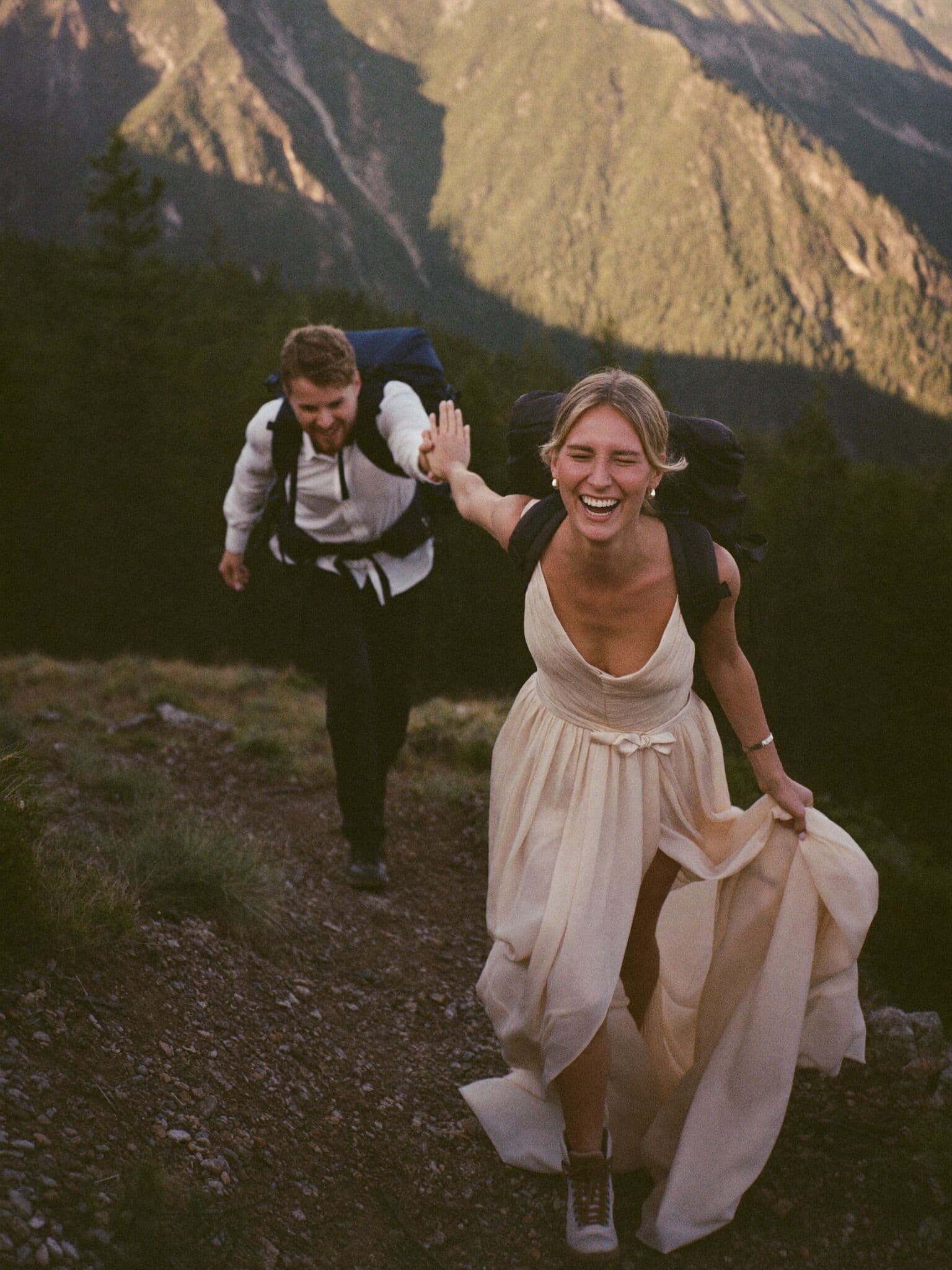
And know this upfront: you do not have to compromise on drama. The dresses that move best on a mountain, light fabrics, split skirts, soft trains, are also the ones that photograph best there. The mountain rewards flow, not structure.
Dresses that move: silhouettes and fabrics
Silhouettes first. A-line and flowy sheath dresses are the reliable winners: full range of motion, forgiving over layers, spectacular in wind. Skirts with a front slit or a detachable overskirt let you hike in freedom and marry in volume. Avoid fitted mermaid cuts and heavily boned strapless bodices; both punish deep breaths and high steps, and you will be doing plenty of each.
Fabrics decide how the dress behaves in weather. Chiffon, georgette, crepe and soft tulle catch wind beautifully, dry fast and shrug off a packed duffel. Heavy satin and mikado wrinkle badly and read stiff in motion. Lace overlays are fine; just check that the base layer stretches.
Practicalities that matter more than people expect: stretch panels or a lace-up back for comfort at mile three, pockets if you can get them, a bustle or wrist loop for the train, and a dress you can get into without three assistants, because your photographer may be your only one. Buy the size that fits your moving body, not your standing one.
The boots reality
Yes, boots. Heels sink in turf, skid on basalt and end days early. Nearly every couple we photograph wears boots under the dress and suit, and the peek of leather under a hem has become part of the adventure elopement look rather than a compromise.
What works: broken-in leather hiking boots, or a lace-up fashion boot with real tread for easy-access locations. Break them in for at least three or four weeks of regular walks before the trip; a wedding day blister is a self-inflicted wound. Wool socks, always, and a spare pair in the pack.
If you cannot let go of a delicate shoe, bring both. Hike in boots, switch for ten minutes of ceremony photos on stable ground, switch back. We build shoe-change moments into timelines weekly.
Layering by climate
Cold is a photography problem before it is a comfort problem: shivering shoulders and clenched jaws show in every frame. Layers solve it without changing your look:
| Climate | Under the attire | Over it | Notes |
|---|---|---|---|
| Iceland, Faroes, Patagonia (windy, 35 – 55°F) | Thermal top and shorts, nude tights | Wool shawl or cropped knit, packable down for between shots | Wind matters more than temperature; secure hair plans |
| Alpine summer: Dolomites, Banff, Switzerland (40 – 70°F) | Light thermal optional | Knit layer for dawn, shed by mid-morning | Big daily swings; sunrise can be near freezing in July |
| Winter and glaciers (10 – 35°F) | Full-length merino base layers | Long wool coat or faux fur, gloves, hand warmers in pockets | We shoot short bursts and warm you up between them |
| Desert and warm coast: Moab, Hawaii, Santorini (65 – 95°F) | Moisture-wicking underlayers only | Nothing needed; sun protection instead | Choose breathable fabrics; midday is for shade, not portraits |
Suits that breathe and bend
A standard structured suit can hike, but a smart one hikes better. Look for stretch wool or wool blends with a touch of elastane, half-lined or unlined jackets, and trousers with room in the seat and thigh. Performance suiting lines are genuinely good now and photograph identically to traditional tailoring.
Color does heavy lifting outdoors. Mid tones, olive, rust, slate blue, warm brown, sit beautifully against rock, moss and snow, while pure black can swallow detail in moody light and overheat in sun. Bring the jacket off-and-on: shirtsleeves for the hike, jacket for vows.
Skip the delicate extras. A tie clip beats a flapping tie in wind, hard-soled dress shoes stay home in favor of boots or leather-look hikers, and a wool overcoat serves both warmth and silhouette in cold climates.
What photographs well in wind and moody light
Wind is a gift if the attire cooperates. Light skirt fabrics, veils and loose hair transform gusts into motion; stiff fabrics just look pushed. Long veils are the single best value item in an adventure wardrobe: ten dollars of tulle becomes the most dramatic frame of the day. Anchor it with proper pins and treat losing it to a cliff as a possibility.
Moody light, overcast, fog, blue hour, favors texture and tone. Ivory and warm white pop against dark basalt and storm skies; textured knits, embroidery and layered tulle keep dimension when the light goes flat. Very cool whites can read grey in fog, which is worth knowing rather than fearing.
Movement beats stiffness in every frame. Choose pieces you can run, twirl, climb and hug in without adjustment, because those are the photographs you will actually print.
The packing list
This is the core of the attire checklist we send every couple:
- Attire in a carry-on garment bag, never checked luggage
- Broken-in boots plus wool socks and a spare pair
- Thermal base layers sized to hide under your attire
- Packable down jacket per person for between-shots warmth
- Wool shawl, knit or overcoat that looks intentional in photos
- Veil with strong pins, plus a backup set
- Steamer or wrinkle-release spray for the night before
- Safety pins, fashion tape, mini sewing kit, stain wipes
- Hand warmers and gloves for cold climates
- Sunscreen and blister plasters regardless of destination
- Dry bag or trash bag to protect the train on wet ground
- Optional second shoes for a brief ceremony-photo switch
Test everything before you fly
One rehearsal solves ninety percent of wardrobe problems: put on the full outfit, boots included, and walk a mile of real trail. You will learn immediately whether the bodice pinches, the boots rub, and the skirt needs a wrist loop. Do it at least a month out so there is time to alter.
Then let us do the rest. Every package includes a location-specific packing and attire brief, and we are happy to look at dress candidates before you buy. After a decade of watching fabric behave in Icelandic wind and Dolomites drizzle, we have strong, useful opinions.
Quick answers
Can you really hike in a wedding dress?
Yes, with the right dress. An A-line or flowy silhouette in chiffon, crepe or georgette, a comfortable stretch or lace-up bodice, and a hem you can lift clears most trails. Many couples hike in leggings and a top, then change near the ceremony spot; we scout private changing locations as part of planning.
What shoes should we wear for a mountain elopement?
Broken-in hiking boots or sturdy lace-up leather boots for both partners, with wool socks. Heels are unsafe on turf, scree and wet rock. If you love a delicate shoe, carry it in the pack and switch for a few minutes of photos on stable ground.
How do we stay warm without ruining the photos?
Merino base layers hidden under the attire, a wool shawl or long coat that reads intentional on camera, and a packable down jacket for every minute between shots. We shoot cold locations in short bursts with warm-up breaks, and hand warmers in pockets cover the rest.
What colors photograph best for outdoor elopements?
Ivory and warm whites hold up against dark rock, moss and overcast skies, while mid-tone suits in olive, rust, slate or brown complement almost every landscape. Pure black can lose detail in flat light, and very cool whites can read grey in fog, so warm tones are the safer bet.
Keep reading
Begin the enquiry
Tell us where the map is pulling you
Enquiry-only packages from $5,000 for eight hours to $12,000 for a multi-day expedition, travel included. We answer every enquiry personally within 48 hours.