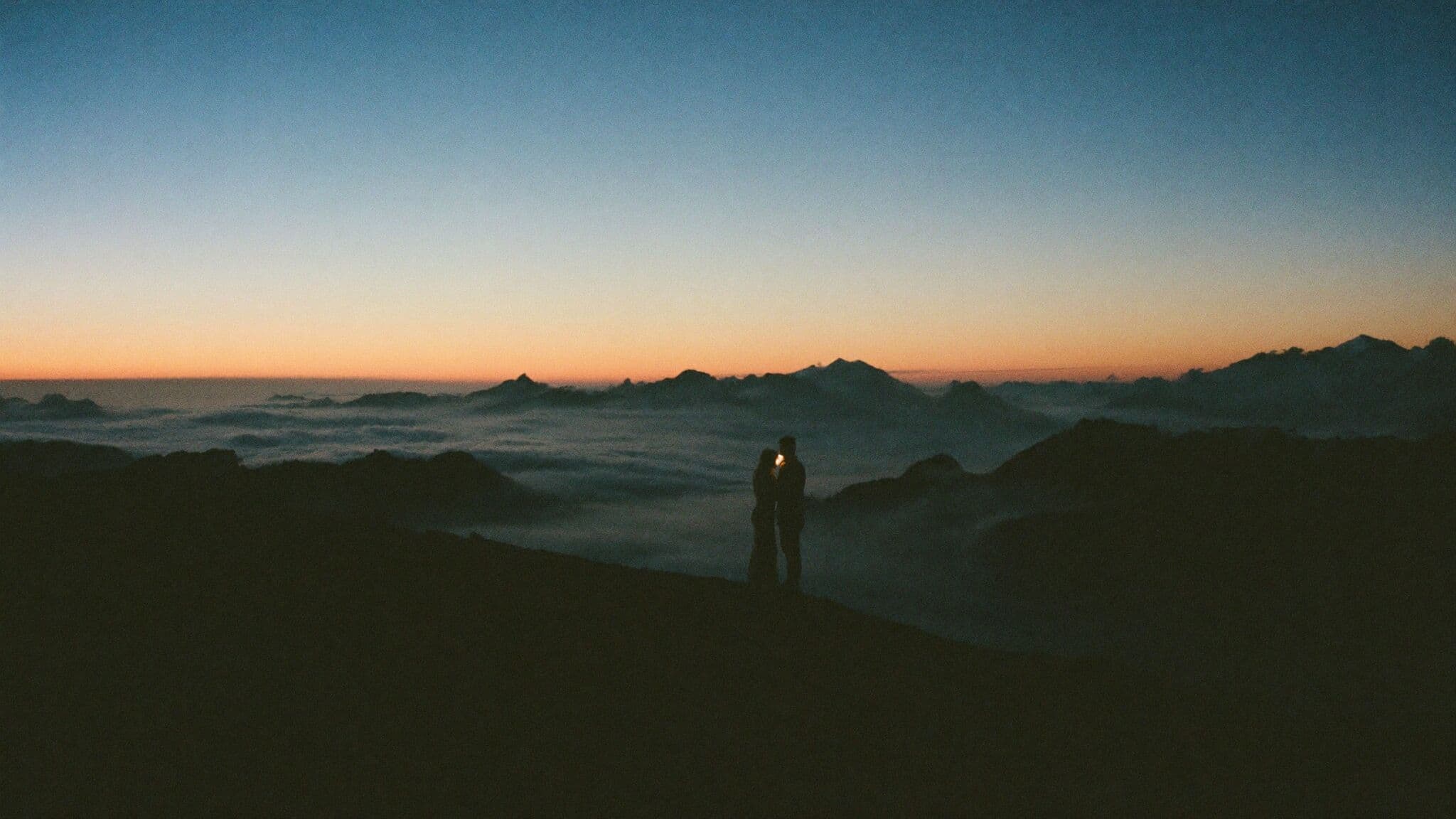
Your Adventure Elopement Timeline: What the Day Actually Looks Like
PUBLISHED AUGUST 5, 2026 · UPDATED AUGUST 20, 2026
The short answer
An adventure elopement day is built backward from light: golden hour and blue hour anchor the ceremony and portraits, everything else flexes around them. A typical eight-hour day runs hair and makeup, a first look, ceremony in prime light, a rest block, then dinner and a final portrait session. Two-day formats split logistics from adventure.
Why light anchors everything
A traditional wedding schedules around a venue booking. An elopement schedules around the sun. The two windows that make photographs sing are golden hour, roughly the first and last hour of direct sun, and blue hour, the soft twilight just before sunrise and after sunset. Midday sun, by contrast, is the harshest light of the day: hard shadows, squinting, washed-out color.
So we build every timeline backward from light. Find sunrise or sunset for your date and location, place the ceremony and key portraits inside the good windows, then hang everything else, hair and makeup, travel, meals, rest, off that spine. It is why an elopement timeline looks strange next to a wedding schedule, and why the galleries look the way they do.
Which anchor you pick shapes the whole day. Sunrise means empty locations and calm winds but an early alarm. Sunset means a gentler morning and a building crescendo, but shared trails and a race against the clock if anything slips. Both are below.
Sample sunrise elopement timeline (8 hours)
The sunrise day is our favorite for famous locations: you will have places to yourselves that hold two hundred people by 10 a.m. This example assumes a 6:15 sunrise:
- 04:00 – Wake up, coffee, layers on; hair and makeup done the night before or kept simple
- 04:45 – Drive to the trailhead, headlamps on
- 05:15 – Hike in the dark, about 45 minutes; we shoot the headlamp walk, it always earns its place
- 06:00 – Arrive at the overlook for blue hour, quiet minutes as the light builds
- 06:20 – First look and ceremony as golden light hits the peaks
- 07:15 – Portraits through the best hour of light, champagne on the summit
- 08:30 – Hike out slowly, candid frames on the trail
- 09:30 – Big breakfast in town, the best meal you will ever eat
- 10:30 – Rest block: nap, hot tub, nothing at all
- 16:00 – Optional evening add-on: a second location for golden-hour portraits
Sample sunset elopement timeline (8 hours)
The sunset day builds all afternoon toward vows in the last, warmest light. This example assumes an 8:00 sunset:
- 12:00 – Relaxed morning, brunch, letters from family read privately
- 13:00 – Hair and makeup while we photograph details: rings, invitations, boots
- 15:00 – First look near your accommodation, quiet portraits
- 15:45 – Drive to the trailhead, playlist mandatory
- 16:30 – Hike to the ceremony spot, about an hour at a wedding-attire pace
- 17:45 – Ceremony with vows as the light turns gold
- 18:30 – Portraits chasing the best light of the entire day
- 19:50 – Sunset itself, then blue-hour frames, the sky doing its final act
- 20:30 – Headlamp descent, celebration dinner or a private chef back at the cabin
The two-day version
Two days is the format we recommend most for destinations like Iceland, the Dolomites or Patagonia, and it is why our two-day package exists. Day one carries the formal weight: ceremony, family moments if anyone is joining, dinner, first light or last light portraits close to your accommodation. Day two is pure adventure: a bigger hike, a glacier walk, a 4x4 route into the highlands, with your attire packed in and worn again somewhere wilder.
Splitting the day solves three problems at once. Weather risk halves, because either day can carry the ceremony. Nothing is rushed, because logistics and adventure no longer compete for the same hours. And you get two completely different landscapes in one gallery instead of one location doing all the work.
It also changes how the day feels. Couples on one-day timelines describe a beautiful blur; couples on two-day timelines describe a honeymoon that happened to contain a wedding. That is the review we are proudest of.
The buffer philosophy
Every timeline we build carries deliberate slack, and this is the part couples resist until it saves them. Mountains make their own weather. Fog sits on a summit for an hour and then lifts. A road closes. A hike takes ninety minutes instead of sixty because the view kept stopping you, which is the point of the view.
The rules we plan by: add fifty percent to every hiking time estimate, because wedding attire and photo stops are real. Hold a 30-to-60-minute cushion around the ceremony window. Keep a scouted backup location for every primary, one we can reach inside an hour. And on multi-day trips, leave one unscheduled day so a storm costs you nothing but a rest day.
Buffers are not pessimism; they are what calm feels like on the schedule. When a squall rolled through one of our Faroes ceremonies, the buffer meant we drank coffee in the van for forty minutes, then married two people in the clearing light. Without it, that story ends differently.
Vendor timing, so nobody waits on anybody
Small day, few vendors, but their timing still matters. Hair and makeup runs 60 to 90 minutes for one person and books earliest; for sunrise days, most artists will either start at 3 a.m. for a fee or style you the evening before with a morning touch-up kit. Florals are delivered or collected the evening prior and spend the night in a cool room, never a car.
Celebrants or officiants need only the ceremony window plus travel, but confirm their comfort with your location's hike; we keep a list of celebrants in each destination who will genuinely walk. If a permit names an exact ceremony time, as some US national parks do, the whole spine locks to it and light planning happens within that constraint.
Dinner is the quiet hero of the timeline. Book the restaurant an hour later than you think you need, or better, arrange a private chef at your accommodation so the kitchen waits on the mountain rather than the other way around.
How we build yours
Every package includes the timeline. We start from your date's actual sun times, factor the trail, the tides, the crowd patterns and the permit rules, and send a draft with your locations mapped hour by hour. Then we revise it together until it feels like your day rather than a schedule.
Packages run from $5,000 for an eight-hour day, $8,500 for two days, and up to $12,000 for multi-day itineraries, travel included. The timeline work is the same obsessive quality at every tier, because it is the part that makes everything else look effortless.
Quick answers
How many hours of photography do we need for an elopement?
Eight hours covers a full single-day elopement comfortably: getting ready, a hike, ceremony, portraits through golden hour and dinner. Less than six forces choices between the hike and the celebration. For destinations worth flying to, the two-day format removes rush entirely and halves weather risk.
Is a sunrise or sunset elopement better?
Sunrise wins for famous locations because you get them empty, and mornings are usually calmer and clearer in the mountains. Sunset wins for couples who want a relaxed morning and a slow build to vows in warm light. The landscape often decides: east-facing overlooks argue for dawn.
What happens if it rains on our elopement day?
The timeline absorbs it. We build 30-to-60-minute buffers around the ceremony, scout a backup location for every primary spot, and on multi-day trips keep one unscheduled day. Drizzle and fog usually photograph beautifully; only genuinely unsafe weather moves a ceremony, and the plan for that exists in advance.
Do we spend the entire day taking photos?
No, and a good timeline makes that obvious. Photography clusters in the golden and blue hour windows, with a long rest block in the middle of most days for naps, hot springs or nothing at all. Most of the day simply feels like the best trip you have ever taken, documented.
Keep reading
Begin the enquiry
Tell us where the map is pulling you
Enquiry-only packages from $5,000 for eight hours to $12,000 for a multi-day expedition, travel included. We answer every enquiry personally within 48 hours.