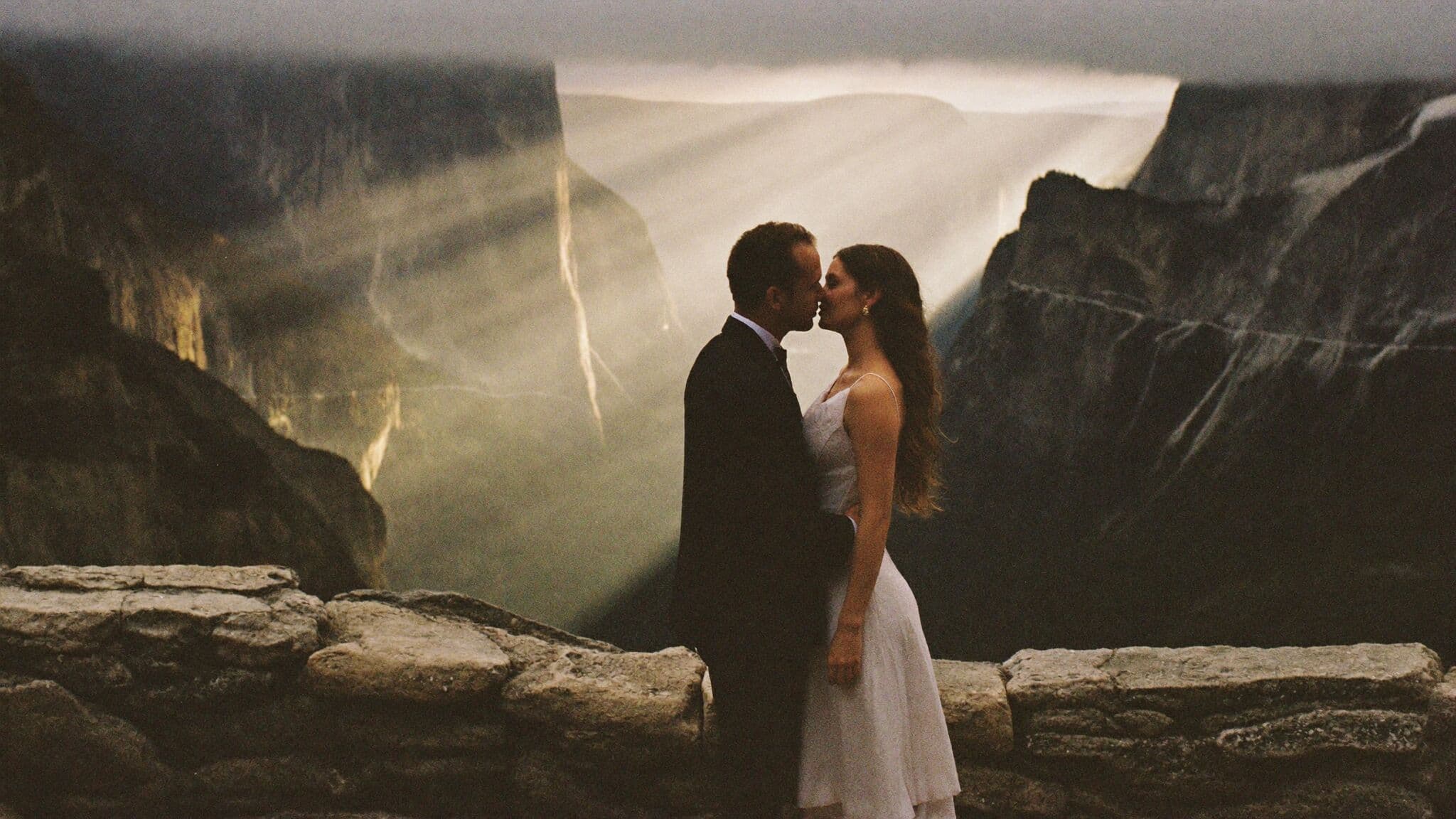
US National Park Elopement Permits: The 2026 Guide
PUBLISHED JULY 9, 2026 · UPDATED AUGUST 20, 2026
The short answer
Every US national park requires a special use permit for a wedding ceremony, even a two-person elopement. Application fees in 2026 range from $50 at Olympic to $300 at Rocky Mountain, with Yosemite at $150 and Zion at $100. Apply two weeks to a year ahead depending on the park, expect designated ceremony sites with group caps, and never skip the permit: rangers do check.
Yes, you need a permit, even for two people
The rule surprises almost everyone: a wedding ceremony in a US national park requires a special use permit regardless of size. Two of you, an officiant and a photographer on an empty overlook still counts as a ceremony under NPS rules. The permit is not about crowd control so much as knowing where ceremonies happen, protecting fragile spots and keeping locations fair for other visitors.
The system is genuinely manageable once you know it. Fees are modest next to any venue rental, applications are mostly simple PDFs or online forms, and the permit buys you something valuable: a legitimate, confirmed right to hold your ceremony in some of the most spectacular public land on Earth.
What trips couples up is that all 63 parks run their own programs. Fees, lead times, ceremony sites and group caps vary park by park, and they change. Every number below is current as of August 2026, and we re-verify against the park's own permit office before any of our couples apply.
2026 permit fees and lead times at a glance
Application fees for the parks we shoot most, with realistic lead times. Most fees are non-refundable even if weather cancels your plans:
| Park | Permit fee (2026) | Apply | Notes |
|---|---|---|---|
| Yosemite | $150 | 21+ days out, up to 1 year | Approved ceremony location list; monitoring fees for 30+ guests |
| Rocky Mountain | $300 | Up to 1 year, by the 1st of the month | 17 designated sites, 10 to 30 person caps |
| Zion | $100 | 3 weeks minimum | Spring and fall dates go early; shuttle logistics matter |
| Arches | $185 | Up to 1 year | One-hour ceremony window; site caps 15 to 80 |
| Mount Rainier | $250 plus $25 application | 4+ weeks recommended | Cost recovery fees; wildflower season books out |
| Grand Teton | $200 | Applications open in December for the year | Schwabacher Landing and other sites cap small groups |
| Glacier | $125 | 4+ weeks, up to 1 year | 32 pre-approved sites; 2-hour ceremony limit |
| Joshua Tree | $120 | 15 days to 12 months | 2-hour window; sites cap 5 to 100 people |
| Olympic | $50 | 2 weeks minimum | Cheapest of the marquee parks |
| Great Smoky Mountains | $50 | 30 days out | Simple process, popular overlooks |
| Acadia | $125 | Months ahead for summer | Cadillac Mountain sunrise slots are competitive |
| Grand Canyon | $280 | Up to 1 year, no expedites | Designated rim sites; South Rim busiest |
How the application process actually works
The typical sequence: you choose a park and a target date, download or open the park's special use permit application, list your preferred ceremony site from the park's approved list, pay the fee, and wait. Processing runs from a few days at quiet parks to several weeks at Yosemite and Rocky Mountain in peak season. The permit arrives as a document you must carry on the day, and some parks call or email to walk through conditions.
Lead time is the part couples underestimate. Rocky Mountain reviews applications starting the first of each month, a year out, and summer Saturdays can be claimed the morning they open. Grand Teton releases the coming year's applications each December, and photographers refresh the page like it is a concert presale. If your heart is set on a specific site at sunrise in July, you want your application in the first possible window. If you are flexible on site and weekday, even four to six weeks can work at many parks.
One more structural thing to understand: a permit almost never grants exclusive use. Your ceremony shares the overlook with whoever else hiked up. This is where timing expertise earns its keep, because a Tuesday sunrise slot at a lesser-known site can feel completely private while a Saturday noon permit at a famous viewpoint means an audience.
Leave No Trace is part of the deal
Every park permit comes with conditions that boil down to Leave No Trace, and they are enforced. The recurring rules across parks:
- Stay on durable surfaces: no trampling meadows, cryptobiotic soil or riverbanks for a better angle
- Nothing thrown or released: no confetti, rice, flower petals, sparklers, smoke bombs or dove releases
- No structures: arches, chairs and sound systems are banned or tightly restricted at most ceremony sites
- Pack out everything, including flower stems, cork cages and the ribbon from your bouquet
- Drones are prohibited in every national park, no exceptions for weddings
- Pets, where allowed at all, stay leashed and are banned from most trails
- Respect wildlife distances: 25 yards from most animals, 100 yards from bears and wolves
What happens if you skip the permit
Rangers do check, especially at famous viewpoints in peak season, and a dress, a bouquet and someone holding a notebook is not a subtle disguise. Ceremonies without permits get stopped, sometimes mid-vows, and citations for violating permit regulations can run into hundreds of dollars. Photographers working commercially without required authorization risk their own fines and their ability to work in that park again.
The quiet cost is worse than the fine: spending your wedding day watching for uniforms instead of being present. For the price of a nice dinner, the permit removes that entirely. There is no version of this where skipping it is the smart move.
How we handle permits for our couples
Permits are folded into our planning work on every package. We track each park's current fees, application windows and site lists, tell you the realistic odds for the date and location you want, and prepare the application so it is submitted the day the window opens. Where we hold commercial use authorizations, that side is already covered; where a park requires anything extra, we file it.
Just as valuable is site strategy. Park ceremony lists contain both the sites everyone applies for and the ones almost nobody does, and some of the quiet ones are better. We have watched couples fight for a crowded overlook while a superior ledge sat empty a permit line away. Knowing the difference is most of what experience in these parks means.
Permit fees are not the whole cost
Budget for the surroundings too. Park entrance fees run about $30 to $35 per vehicle and are not waived by a wedding permit. Some parks add monitoring or cost recovery fees for larger groups, like Yosemite's hourly monitoring above 30 guests and Arches' monitoring charges. Timed entry reservations, currently used by parks including Rocky Mountain, Arches and Glacier in peak season, are a separate system your guests need too. And in-park lodging for the night before a sunrise ceremony books six to twelve months out. None of this is complicated, but it all belongs on the checklist, which is why it is on ours.
Quick answers
Do we need a permit if it is just the two of us and a photographer?
Yes. Every US national park requires a special use permit for a wedding ceremony regardless of group size, and a photographer may separately need commercial authorization depending on the park. The fee is typically $50 to $300. We confirm and handle both layers for every park elopement we photograph.
How far in advance should we apply for a national park wedding permit?
As early as the park allows for peak season: Rocky Mountain and Arches accept applications a year out, Grand Teton opens each December. For midweek shoulder-season dates, four to eight weeks is usually enough. Minimums range from 15 days at Joshua Tree to three weeks at Zion and Yosemite.
Which national park has the cheapest elopement permit?
Among the marquee parks, Olympic and Great Smoky Mountains at $50 are the cheapest in 2026, and both are spectacular. Zion runs $100, Joshua Tree $120, Glacier and Acadia $125, Yosemite $150. Rocky Mountain is the priciest of the big names at $300. Fees change, so verify with the park before applying.
Can we have guests at a national park elopement?
Yes, within each site's cap. Rocky Mountain's designated sites allow 10 to 30 people, Arches ranges 15 to 80 by location, and Joshua Tree's amphitheater takes up to 100. Bigger groups can trigger monitoring fees and parking plans, so we match your guest count to the right site early in planning.
Keep reading
Begin the enquiry
Tell us where the map is pulling you
Enquiry-only packages from $5,000 for eight hours to $12,000 for a multi-day expedition, travel included. We answer every enquiry personally within 48 hours.