Do You Need Witnesses or an Officiant to Elope?
PUBLISHED MAY 28, 2026 · UPDATED AUGUST 20, 2026
The short answer
In most US states, a legal marriage requires an authorized officiant plus zero to two witnesses, depending on the state. Colorado, the District of Columbia, Illinois and Pennsylvania allow self-solemnization, meaning you can legally marry with no officiant and, in most of those, no witnesses. Your photographers can usually serve as witnesses, so a true two-person elopement is possible almost anywhere.
The short answer: it depends on where you sign
Marriage law in the US is state law, so the people legally required at your ceremony change the moment you cross a state line. The good news is that the requirements are lighter than most couples expect. No state requires guests. None requires family. What some require is an authorized officiant and one or two adult witnesses, and both of those roles can be filled by people you are already bringing, including us.
We photograph elopements in more than a dozen states every year, and part of our planning work is confirming exactly who needs to be standing there when you sign. Below is how the rules break down, plus the states where you can skip the officiant entirely.
Witness and officiant rules in popular elopement states
Here is a sample of how requirements vary across the states couples elope in most. Always confirm with the county clerk who issues your license, since counties occasionally add their own quirks:
| State | Officiant required? | Witnesses required |
|---|---|---|
| Colorado | No, you can self-solemnize | 0 |
| California | Yes | 1 (0 with a confidential license) |
| Washington | Yes | 2 |
| Hawaii | Yes | 0 |
| New York | Yes | 1 |
| Utah | Yes | 2 |
| Montana | No, by declaration of marriage | 2 |
| Texas | Yes | 0 |
| Oregon | Yes | 2 |
| Tennessee | Yes | 0 |
Self-solemnization: the states where nobody else is needed
Self-solemnization means the two of you marry each other. No officiant reads anything, nobody pronounces you anything. You sign your own license, and it is exactly as legal as a cathedral wedding.
Colorado is the famous one and the reason so many couples elope there: any couple can self-solemnize with zero witnesses, and the county clerks are completely used to it. The District of Columbia and Illinois also allow any couple to self-solemnize without witnesses. Pennsylvania issues a self-uniting license, a Quaker tradition opened to everyone, which requires two witnesses to sign. Kansas and Montana allow self-solemnization with two adult witnesses as well.
A second tier of states allows it only with a religious exemption: Wisconsin permits it for members of religious societies whose custom is to marry without clergy, and California, Maine and Nevada have similar provisions tied to groups like the Quakers and Baha'i. These rules do shift, so we re-verify the statute for your state during planning rather than relying on a blog post, including this one.
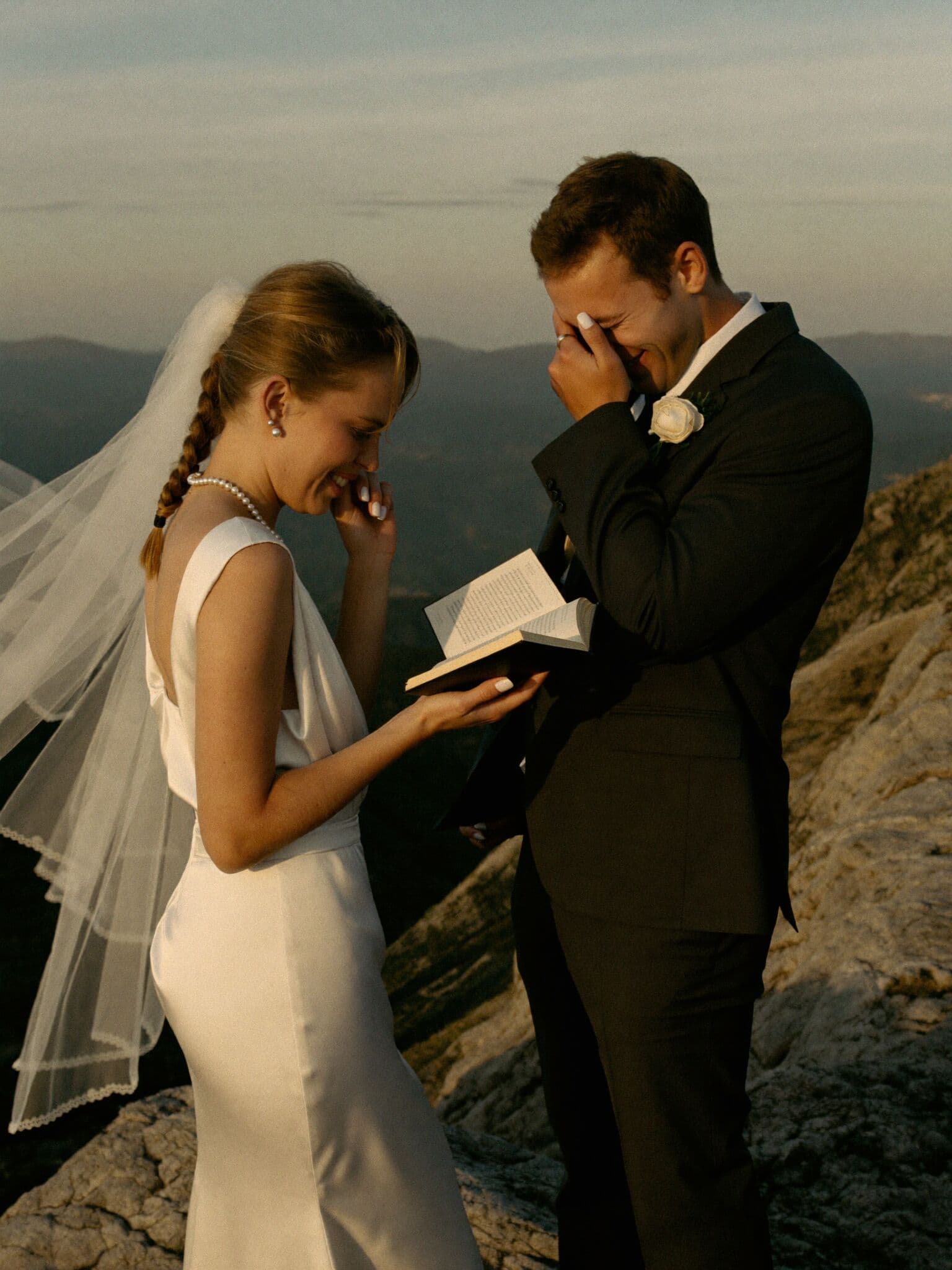
Practically, self-solemnization is wonderful for couples who want a genuinely private ceremony. You can read vows alone on a ridgeline at sunrise with no stranger standing between you, then sign the license on a rock. About a third of our US couples choose this route.
Your photographers can be your witnesses
In every state we work in that requires witnesses, the only qualifications are being present at the ceremony and being an adult (18 or older in most states, and a few accept younger). There is no rule that a witness must know you, be related to you, or wear anything nicer than hiking boots.
We sign as witnesses for our couples all the time, and so do most experienced elopement photographers. If a state wants two witnesses and there are two of us on your team, you are covered. If we are shooting solo, your officiant plus one of us usually satisfies it, or we quietly recruit a delighted hiker, which has produced some of the best guestbook stories we have ever heard.
Who counts as an officiant, and how couples handle it
Each state defines who may solemnize a marriage: typically judges, active or sometimes retired, plus ordained or authorized members of religious organizations. Most states accept online ordination through organizations like Universal Life Church or American Marriage Ministries, which is how a friend or family member can legally marry you, though a few jurisdictions have contested online ordinations, so we check before you ask your best friend to do it.
For couples without a friend in mind, we connect you with professional officiants who hike. A good one handles the legal wording in under two minutes and gives the rest of the ceremony back to you. And if the officiant logistics for a location ever get silly, there is always the symbolic route: sign paperwork at your county courthouse, then hold the real ceremony wherever you want with no legal requirements at all.
Celebrant vs officiant: what the words mean abroad
Outside the US, the vocabulary changes and so does the law. In the UK, Ireland, Australia and New Zealand, the person leading a ceremony is usually called a celebrant. The critical distinction is between celebrants who can legally marry you and those who lead symbolic ceremonies only.
Scotland is the standout. Humanist celebrants there have had legal authority since 2005, and ceremonies can happen anywhere: a Glencoe ridge, a Skye sea cliff, a castle courtyard. Humanist Society Scotland celebrants hold prescribed status, meaning the outdoor ceremony they lead is itself the legal marriage, witnesses and all. This is why Scotland is our top recommendation for couples who want a fully legal outdoor elopement in Europe. England and Wales, by contrast, still do not recognize humanist ceremonies as legally binding on their own, so couples there typically do a registrar signing plus a celebrant ceremony outdoors.
In countries where legal marriage for foreigners is genuinely bureaucratic, think Italy, Japan or Morocco, most of our couples marry legally at home first and hold a symbolic ceremony abroad. Nothing about the day looks different, and no witness or officiant rules apply at all.
What we handle for you
Legality research is built into every one of our packages. Before you book flights we confirm four things: the license process and waiting period for your location, who must solemnize, how many witnesses are needed and who can serve, and any county-level oddities. On the day, we carry pens, we know where the license is, and we have never once let a couple hike down a mountain with an unsigned certificate.
Quick answers
Can our photographer legally be our witness?
Yes, in every US state we work in that requires witnesses. A witness only needs to be an adult who was present at the ceremony. We sign for our couples regularly, and with two photographers on your day, states requiring two witnesses are covered without bringing anyone else.
Which states let you get married without an officiant?
Colorado, the District of Columbia, Illinois and Pennsylvania allow any couple to self-solemnize, with Pennsylvania requiring a self-uniting license and two witnesses. Kansas and Montana allow it with two witnesses. Wisconsin, California, Maine and Nevada allow variants tied to religious exemptions. We verify the current statute for your state during planning.
Can a friend marry us if they get ordained online?
In most states, yes. Online ordination through Universal Life Church or American Marriage Ministries is widely accepted, and your friend simply completes the legal wording and signs. A few jurisdictions have challenged online ordinations, so we confirm the rules for your specific county before you plan around it.
Are humanist ceremonies legal outside Scotland?
Scotland, Ireland, Northern Ireland, Jersey and Guernsey recognize humanist marriage; Scotland has since 2005 and allows ceremonies anywhere. England and Wales do not yet, so couples there sign with a registrar and hold the celebrant ceremony separately. We track the current status for every destination we shoot.
Keep reading
Begin the enquiry
Tell us where the map is pulling you
Enquiry-only packages from $5,000 for eight hours to $12,000 for a multi-day expedition, travel included. We answer every enquiry personally within 48 hours.